Healthcare interoperability is often discussed in terms of technology: systems, interfaces, APIs, and data exchange. But meaningful interoperability depends on something deeper: a shared understanding of the clinical information being exchanged.
For medication-related care, that shared understanding is critical. Health plans, providers, pharmacists, and care teams all need consistent ways to document medication therapy problems, recommendations, and interventions so that information can move across organizations and be acted on with confidence.
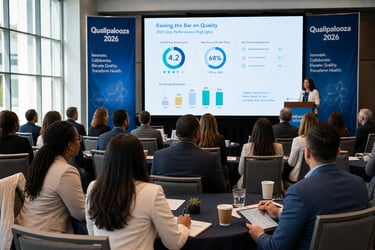
At ActualMeds, we believe advancing interoperability requires both implementation and participation. That is why we are proud that ActualMeds was invited to participate in the Pharmacy Quality Alliance (PQA) Medication Therapy Management Advisory Group, which focused on supporting adoption of the Medication Therapy Problem (MTP) Categories Framework and advancing standardized clinical documentation practices.
Although the MTP Categories Framework was focused on traditional Medication Therapy Management (MTM) programs, its value extends well beyond MTM. A consistent framework for documenting medication-related issues can support broader pharmacist interventions, care management, population health programs, transitions of care, medication optimization, and interdisciplinary care coordination.
This work also highlights the importance of standardized terminology and coding, including SNOMED CT, in improving the quality and usability of medication-related data. When organizations use common language to capture medication therapy problems and recommendations, they reduce ambiguity, improve data quality, and make clinical information easier to exchange, aggregate, and apply.
That matters because healthcare organizations are increasingly asked to make sense of information coming from many different sources. Health plans and care teams need a cohesive, actionable view of the patient that supports timely interventions and measurable outcomes. Standards make that possible by helping medication-related clinical information retain its meaning as it moves across systems.
Through engagement in initiatives such as the PQA MTP Categories Framework and our work with the HL7 FHIR PACIO group, ActualMeds is committed to helping advance a future where medication information is more consistent, more interoperable, and more useful in improving patient outcomes.
Industry collaboration is essential to that future. By working together around common standards, we can move closer to a healthcare ecosystem where medication-related insights are easier to share, easier to understand, and easier to act on.